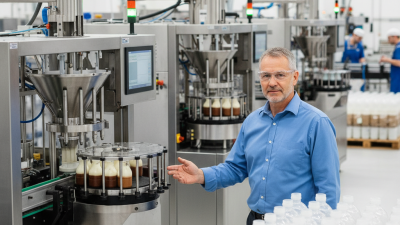
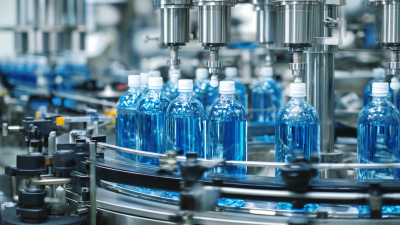
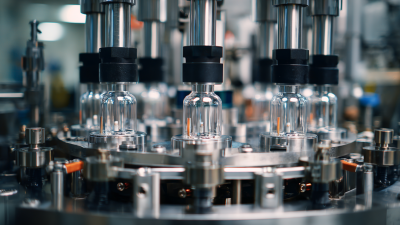
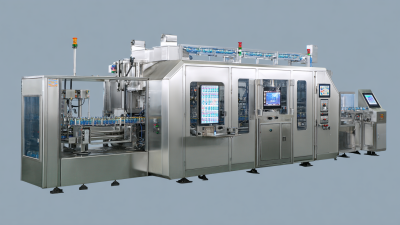
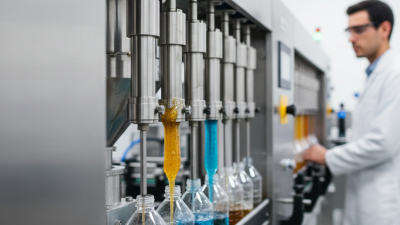
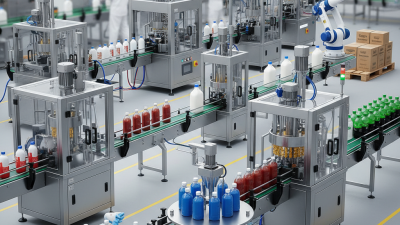
China has become a major sourcing center for filling machine technology, serving beverage, food, cosmetic, pharmaceutical, and chemical manufacturers. Its suppliers now offer piston, gravity, vacuum, rotary, and servo-driven systems. These machines can fill glass bottles, PET containers, aluminum cans, and flexible packages with controlled accuracy.
Fortune Business Insights valued the global filling machines market at approximately USD 6.64 billion in 2023. The same report projects growth to nearly USD 9.86 billion by 2032. This expansion reflects stronger demand for automation, hygienic production, and lower product waste. PMMI’s industry research also identifies labor shortages and production efficiency as important drivers for packaging automation. The figures are useful, but they are not universal. Market definitions differ between reports.
Jorge Izquierdo, PMMI’s Vice President of Market Development, has stated, “Automation is becoming increasingly important for packaging operations facing labor shortages.” His observation explains why global buyers examine Chinese suppliers beyond the quoted machine price. A reliable evaluation should include filling accuracy, contact-material certification, changeover time, clean-in-place design, spare-parts access, and after-sales support. A stainless-steel machine may look impressive under factory lights, yet weak documentation can create costly delays. That risk is easy to underestimate.
This guide introduces China’s top filling machine suppliers for global buyers. It focuses on practical selection, export experience, technical capability, and verification steps. Supplier quality is not identical across the market. Careful buyers should request samples, factory videos, test records, and references before signing a contract.
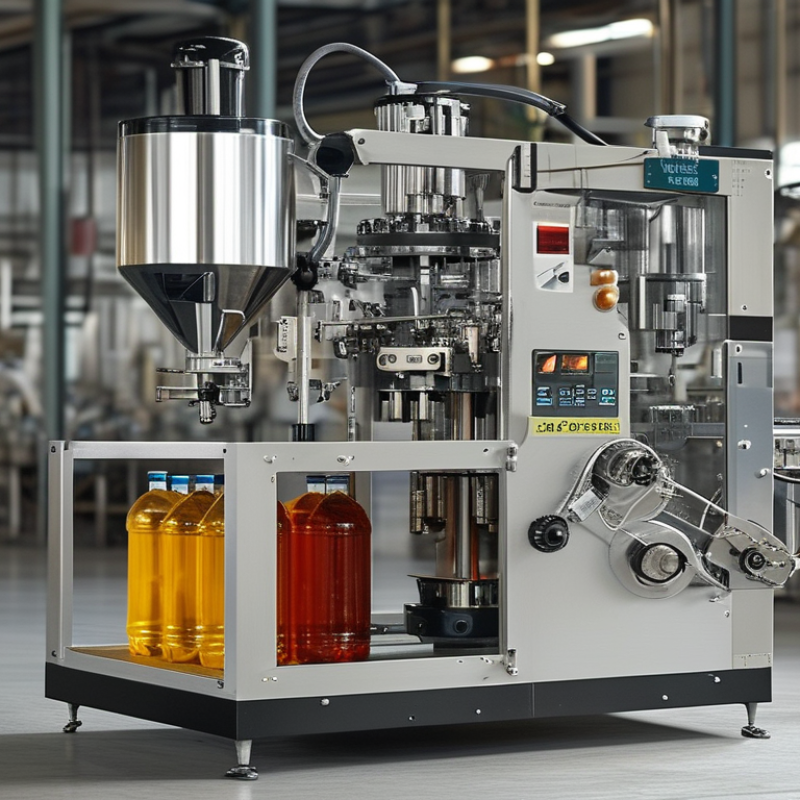
Choosing among China’s top filling machine suppliers requires more than a polished website. A reliable supplier explains how its equipment handles your product, container, speed, and cleaning routine. During a factory visit, inspect welds, electrical cabinets, spare-part storage, and final testing records. Ask to run a sample product through the machine. Watch the nozzle stop cleanly, without dripping or foaming. Practical evidence matters more than sales language. Good engineers discuss limits openly. A supplier that admits a speed trade-off may be more trustworthy than one promising perfect output.
Professional capability appears in details. The supplier should provide clear drawings, material certificates, calibration records, operating instructions, and a documented acceptance test. Ask how filling accuracy is measured and how often sensors are checked. Confirm whether operators receive training and whether technical support responds across time zones. Review references from similar applications, not merely large installations. Traceable component records also reduce uncertainty during maintenance. Some factories offer impressive customization, yet change-control procedures remain weak. That gap deserves careful questions before any deposit or production schedule.
Tips: Prepare a written specification with container dimensions, target volume, viscosity range, speed, and cleaning method. Request videos of comparable trials, then repeat the test independently when possible. Check packaging, export documents, installation support, and spare-part lead times. Keep questions in one shared record. Small omissions become expensive later. Leave room for doubt. A second technical review can reveal assumptions your first inspection missed.
| Evaluation Dimension | Typical Industry Benchmark | What Reliable Suppliers Should Provide | Buyer Verification Method | Importance for Global Buyers |
|---|---|---|---|---|
| Filling Technology | Piston, peristaltic, gravity, overflow, auger, or weight-based filling, selected according to product characteristics. | A documented explanation of why the proposed technology suits viscosity, foaming tendency, particle size, temperature, and container type. | Send representative product samples and request a recorded filling test using the intended containers. | Correct technology selection affects accuracy, cleaning time, product loss, and operating stability. |
| Filling Accuracy | Many standard liquid and paste filling applications target approximately ±0.5% to ±1% under stable operating conditions; actual results depend on product and equipment. | A written accuracy specification, test conditions, sample measurement records, and an explanation of allowable variation. | Conduct repeated weigh checks at low, medium, and high filling volumes during factory acceptance testing. | Higher accuracy reduces giveaway, regulatory risk, and customer complaints. |
| Production Capacity | Small semi-automatic systems may produce tens of containers per minute, while automated lines can exceed 100 containers per minute depending on format and process. | Capacity calculations based on actual container size, filling volume, product behavior, changeover time, and operating schedule. | Compare guaranteed output with a witnessed trial rather than relying only on an empty-machine speed claim. | Realistic capacity planning prevents underperformance and unnecessary overinvestment. |
| Product Compatibility | Contact parts are commonly selected from stainless steel grades such as 304 or 316L, depending on corrosion, hygiene, and product requirements. | Material certificates or declarations, seal specifications, compatibility guidance, and a clear list of all product-contact components. | Review material documentation and test the machine with the actual formulation, including cleaning chemicals. | Compatible materials help prevent contamination, corrosion, leakage, and premature component failure. |
| Hygienic Design | Common hygienic features include smooth welds, limited product-holding areas, sanitary connections, drainability, and tool-free or simplified disassembly. | Detailed product-contact drawings, cleaning instructions, drainage provisions, and documented cleaning or sanitation procedures. | Inspect weld quality, dead spaces, seals, hoses, valves, and accessibility during a factory audit. | Good hygienic design reduces cleaning risk and supports food, beverage, cosmetic, and pharmaceutical production requirements. |
| Automation and Controls | Industrial filling systems commonly use PLC control, a touchscreen interface, sensor-based bottle detection, and recipe or parameter storage. | A complete control-system description, electrical drawings, password and backup policy, alarm list, and language options. | Request a live demonstration of recipe changes, fault alarms, emergency stops, and data backup procedures. | Reliable controls improve repeatability, operator safety, troubleshooting, and future integration. |
| Container and Format Flexibility | Many machines can accommodate multiple container sizes, but each additional format may require different nozzles, guides, pumps, or change parts. | A format matrix showing supported dimensions, required change parts, adjustment time, and limitations. | Test every planned container and closure format before approving the final configuration. | Flexibility supports product expansion while keeping changeover time and spare-part costs under control. |
| Compliance Documentation | Export projects may require documents such as CE-related technical files, electrical safety information, material declarations, risk assessments, and user manuals. | Machine-specific documentation rather than generic certificates, including manuals, schematics, parts lists, risk information, and declarations where applicable. | Match document details with the quoted machine model, configuration, destination-market requirements, and serial number. | Complete documentation supports customs clearance, installation, staff training, and workplace safety. |
| Testing and Quality Control | A structured process normally includes design review, incoming-component checks, assembly inspection, functional testing, and final acceptance testing. | Inspection records, test checklists, calibration information, traceable component lists, and a defined factory acceptance procedure. | Use a signed acceptance checklist covering output, accuracy, safety devices, changeover, cleaning, and alarms. | Documented testing lowers the risk of receiving an incomplete or unstable machine. |
| Lead Time and Delivery Control | Standard machines may require several weeks, while customized complete lines often require a longer engineering, fabrication, testing, and shipping schedule. | A milestone-based schedule covering design approval, component procurement, assembly, testing, packing, and shipment. | Link payments and approvals to measurable milestones and request updated production photographs or inspection records. | Transparent delivery control helps buyers coordinate installation, staffing, utilities, and market launch dates. |
| After-Sales Support | Professional support commonly includes remote troubleshooting, spare-parts guidance, installation assistance, operator training, and maintenance instructions. | Defined response times, spare-parts lists, service channels, training materials, warranty terms, and escalation procedures. | Ask for service references from comparable export projects and confirm availability of critical replacement parts. | Strong support reduces downtime and makes overseas operation more manageable. |
| Total Cost of Ownership | The purchase price is only one cost element; utilities, consumables, change parts, maintenance, labor, rejected product, and downtime also affect total cost. | A transparent quotation separating machine price, optional equipment, installation, training, spare parts, shipping, and taxes or duties where applicable. | Compare lifecycle costs using the same production volume, labor assumptions, product loss rate, and maintenance period. | A lower initial price does not necessarily represent the lowest long-term operating cost. |