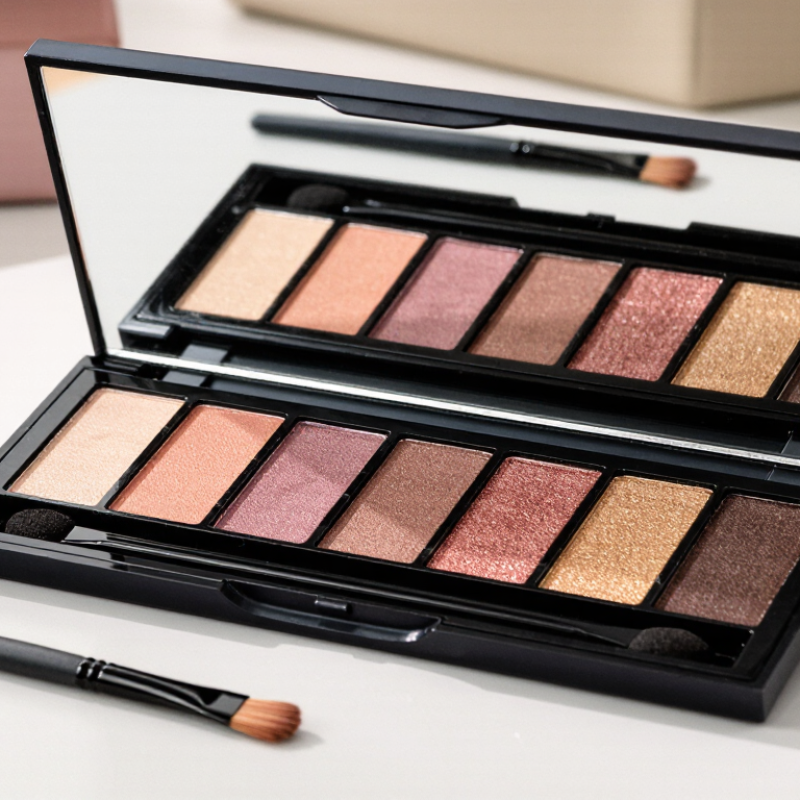
Why Choose an Eye Shadow Palette for Your Brand?
Building a distinctive and profitable palette collection requires more than attractive shades. It requires evidence, testing, and disciplined product planning. Grand View Research valued the global eye makeup market at approximately $18.1 billion in 2023. The same report projects continued growth through 2030, supported by product innovation and rising beauty participation.
Start with a clear customer problem. A compact palette might serve commuters, while a larger palette can support artists and enthusiasts. Use shade families with practical roles: a soft base, a buildable transition tone, a defining depth, and one memorable accent. Circana reported that U.S. prestige makeup sales grew strongly in 2023, showing continued demand for expressive color and premium performance. Yet market growth does not guarantee success.
Small details matter. Test fallout on different skin tones, not only studio models. Check whether the mirror works in dim bathroom light. Measure pan size, packaging weight, and repeat-purchase potential. A distinctive palette should look recognizable before customers open it. It should also feel easy to use.
The difficult part is restraint. Ten similar browns can weaken a collection. A bold color may attract attention but remain untouched. I would not assume social media interest equals lasting sales. Pilot batches, customer interviews, and reorder data can expose uncomfortable gaps. According to McKinsey’s beauty industry analysis, consumers increasingly expect value, quality, and personalization, so every shade must justify its place. Even one poorly performing color deserves a serious review.