Choosing the top Plastic Food Container manufacturers worldwide requires more than comparing catalogs or annual production figures. Reliable manufacturers must combine food-grade resin selection, precise molding, secure sealing, and consistent quality control. Their containers should protect texture, reduce leakage, and withstand refrigeration, reheating, and repeated handling. Small details matter, including lid fit, corner strength, wall thickness, and clear batch traceability.
Packaging scholar Dr. Susan Selke has emphasized, “Packaging is a system, not merely a container.” This perspective guides our evaluation. A strong supplier manages design, materials, production, testing, logistics, and end-of-life considerations as connected responsibilities. Experience also matters. Manufacturers serving meal-preparation brands may prioritize stackability, while those supplying restaurants often need rapid output and durable lids. Neither model is automatically better.
This guide examines established producers across major manufacturing regions. It considers production capacity, customization, food-contact documentation, sustainability efforts, export experience, and customer support. Public information is useful, but it is not always complete. Some rankings may change when factories expand, resin costs move, or new recycling technologies become practical. A low quoted price can also hide tooling fees, inconsistent tolerances, or expensive freight.
There is no perfect manufacturer.
Buyers should request samples, inspect closure performance, and verify test records before signing large contracts. The companies discussed here represent credible options, not universal winners. Their suitability depends on application, market, budget, and distribution distance. That practical distinction keeps the comparison useful for importers, food brands, retailers, and packaging professionals.
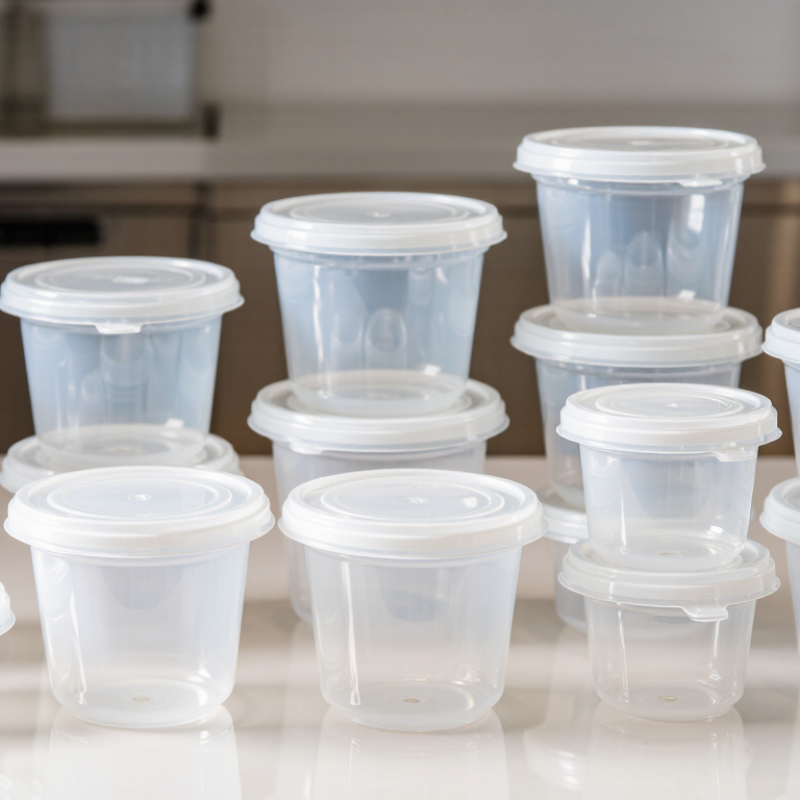
Top Plastic Food Container Manufacturers Worldwide?
Global plastic production reached 413.8 million tonnes in 2023, according to PlasticsEurope’s Plastics – the Fast Facts 2024 report. This scale shows why food container manufacturing remains highly competitive. However, production volume alone cannot identify the best supplier. Buyers should examine resin traceability, mold precision, recycled content, and food-contact testing records. A large factory may still deliver uneven wall thickness or weak lids.
The OECD Global Plastics Outlook reports that packaging represents a major share of global plastic use and waste. For container manufacturers, this creates practical pressure. Good production should reduce material without causing leaks, warping, or poor stacking. During a factory audit, inspect injection-molding lines, clean storage areas, seal tests, and batch records. Small details matter. A lid that flexes after repeated opening can damage customer confidence.
Manufacturers serving international markets also need reliable quality systems and documented compliance with applicable food-contact requirements. Third-party testing can verify migration limits, odor, color stability, and temperature performance. PlasticsEurope notes that mechanical recycling capacity is expanding, but recycled feedstock quality can vary. This is a real weakness, not a minor footnote. A responsible manufacturer should disclose material sources and explain where recycled resin is unsuitable. Buyers should compare evidence, not polished brochures.
| Material | Resin Identification Code | Typical Food-Container Applications | Typical Density (g/cm³) | Approx. Melting Range (°C) | Transparency | Microwave Suitability |
|---|---|---|---|---|---|---|
| Polypropylene (PP) | 5 | Reusable meal-prep boxes, yogurt cups, takeaway containers, lids | 0.90–0.91 | 160–166 | Translucent to opaque | Generally suitable when labeled |
| High-Density Polyethylene (HDPE) | 2 | Milk and juice containers, food pails, storage tubs, bottles | 0.94–0.97 | 125–135 | Opaque to translucent | Product-specific |
| Polyethylene Terephthalate (PET) | 1 | Beverage bottles, edible-oil bottles, clear trays, clamshells | 1.33–1.40 | 250–260 | Usually clear | Usually not suitable unless labeled |
| Low-Density Polyethylene (LDPE) | 4 | Flexible food pouches, squeeze bottles, liners, wraps and bags | 0.91–0.94 | 105–115 | Translucent | Product-specific |
| Polystyrene (PS) | 6 | Disposable cups, trays, bakery containers and protective foam packaging | 1.04–1.06 | 240–270 | Clear or opaque | Generally not suitable |
| Polyvinyl Chloride (PVC) | 3 | Selected food films, seals and specialized packaging components | 1.30–1.45 | 160–210 | Clear to opaque | Usually not suitable unless labeled |

A credible ranking should start with verified capacity, not impressive factory photographs. Request annual output, machine count, resin throughput, and utilization rates. Capacity without utilization can mislead. A plant may list 50,000 tonnes annually but operate far below that level.
Certifications provide a stronger quality filter. ISO’s 2023 Survey recorded more than 1.26 million ISO 9001 certificates worldwide, showing quality certification is widespread, but not automatically equal. For food containers, check ISO 22000 or FSSC 22000, documented HACCP controls, migration testing, and traceable batch records.
Confirm certificate scope and expiry dates. A certificate covering office administration proves little about production lines. That detail is often missed.
Reach should combine export capability, warehouse locations, and regulatory experience. UN Comtrade data can help compare container-related trade flows, although customs codes may combine several plastic products. PlasticsEurope reported that packaging represented 40.5% of European plastics demand in 2022, highlighting the sector’s scale and competitive pressure.
I would score manufacturers across three areas: capacity, 35%; certifications and audit history, 35%; international reach, 30%.
This weighting is imperfect. A smaller producer may offer better traceability than a massive facility. Verify food-contact compliance for each destination, including testing records, labeling controls, and change-management procedures. Supplier interviews and site audits still matter more than a polished ranking table.
Manufacturers in North America often emphasize large-scale production, food-contact testing, and consistent delivery. Many serve supermarkets, meal-preparation companies, and institutional kitchens. Their facilities commonly use automated molding lines, traceable resin batches, and strict dimensional checks. Some also offer recycled-content options, although performance can vary between materials.
European producers frequently focus on lightweight designs, reusable systems, and detailed sustainability reporting. Their containers may include leak-resistant seals, stackable shapes, and clear labeling for temperature limits. Across Asia-Pacific, manufacturing capacity is especially diverse. Suppliers range from highly automated exporters to smaller specialists serving regional food businesses. Buyers should inspect mold quality, factory hygiene, production records, and export experience rather than relying on price alone. A polished website proves little.
Tips: Request recent food-contact test reports and sample units before placing an order. Check lid fit after refrigeration, microwave heating, and repeated washing. Ask how suppliers control odor, warping, and color variation. Confirm carton protection, lead times, and replacement procedures in writing. An on-site audit can reveal details that documents miss.
Regional strengths are not absolute. A European supplier may have excellent engineering but limited capacity. An Asian factory may offer flexible customization but require closer quality monitoring. North American production can simplify domestic logistics, yet costs may be higher. My practical preference is a balanced review: verify materials, test real usage, and compare total delivered cost. The cheapest container can become expensive after failures.
Top Plastic Food Container Manufacturers Worldwide
When comparing food container manufacturers worldwide, compliance should guide the shortlist. A professional supplier should explain how its materials meet FDA food-contact requirements and EU Regulation 10/2011. These rules address substances that may migrate into food. Ask for recent migration test reports, material declarations, and production records. Do not accept a certificate without checking its scope, date, and testing conditions.
ISO 22000 shows that a manufacturer manages food safety risks through a structured system. However, certification alone does not guarantee perfect containers. During factory reviews, inspect resin storage, molding areas, sealing surfaces, and lot-code traceability. BPA control also needs clear evidence, especially for containers used with hot or oily foods. Independent laboratory results are more useful than general marketing claims. In practice, small documentation gaps can reveal larger process weaknesses. Even experienced suppliers may need closer review.
Tips: Request samples from different production lots. Test odor, lid fit, clarity, and leakage after heating. Confirm that the tested material matches the final product. Review corrective-action records, not only successful audit reports. A reliable manufacturer welcomes difficult questions.
Key adoption years for major U.S. and international food-contact, food-safety, and BPA requirements.
The years indicate when each framework or regulation was introduced or adopted, not a manufacturer score. FDA food-additive controls trace to the 1958 Food Additives Amendment; ISO 22000 was first published in 2005; EU Regulation (EC) No 1935/2004 established the general food-contact framework; EU Regulation No 10/2011 covers plastic food-contact materials; and EU Regulation (EU) 2024/3190 introduced the current EU BPA restriction, entering into force in 2025.
Top Plastic Food Container Manufacturers Worldwide?
Recycled content is reshaping food-container manufacturing, but the numbers remain sobering. The OECD’s Global Plastics Outlook reports that only 9% of global plastic waste was recycled in 2019. Around 50% went to landfill, while 22% was mismanaged. Recycling is uneven. Collection quality, local infrastructure, and contamination strongly affect results.
A circular container begins with design, not marketing. Manufacturers can use fewer polymers, clearer labels, compatible colors, and simpler lids. These choices improve sorting and washing efficiency. In a practical factory audit, small details matter: greasy flakes, dark pigments, and mixed materials can reduce usable output. The Ellen MacArthur Foundation’s New Plastics Economy reports have repeatedly stressed the need for reusable systems and higher recycled content. Yet recycled resin for food-contact packaging requires strict traceability, safety validation, and controlled processing.
The gap is real. A container may include recycled content but still lack a credible recovery route. That is not full circularity. The OECD data also reveals an uncomfortable weakness: recycling growth cannot depend only on better factories. Collection systems must improve alongside product design and consumer access. Manufacturers should publish recycled-content percentages, explain measurement methods, and disclose whether figures refer to production scrap or post-consumer material. These details build trust. They also expose imperfect progress, which is more useful than polished claims. Reports from the OECD and the UN Environment Programme support a broader lesson: circularity requires coordinated action across design, infrastructure, policy, and purchasing decisions.
Accutek Packaging Equipment Companies, Inc. stands as one of the premier privately owned packaging machinery manufacturers in the United States.

Sign up for all the news about our latest arrivals