Why Choose a Tandem Cold Rolling Mill for Your Manufacturing Needs?
When choosing equipment for metal manufacturing, the tandem cold rolling mill stands out. This technology offers several advantages that can significantly impact production efficiency. A tandem cold rolling mill reduces the thickness of metal strips with precision. The process involves multiple working stands, allowing for continuous rolling. This leads to increased output and lower production costs.
Imagine optimizing your production line with a tandem cold rolling mill. It can handle various materials, from steel to aluminum. However, it's essential to ensure proper maintenance and setup. Some manufacturers overlook this, leading to inefficiencies. A poorly calibrated mill can result in product defects and wasted resources.
Investing in a tandem cold rolling mill is a strategic decision. It requires careful planning and consideration of your production needs. You must weigh the initial investment against long-term benefits. A well-chosen tandem cold rolling mill can enhance your competitiveness. Proper reflection on your unique manufacturing challenges is crucial for success.
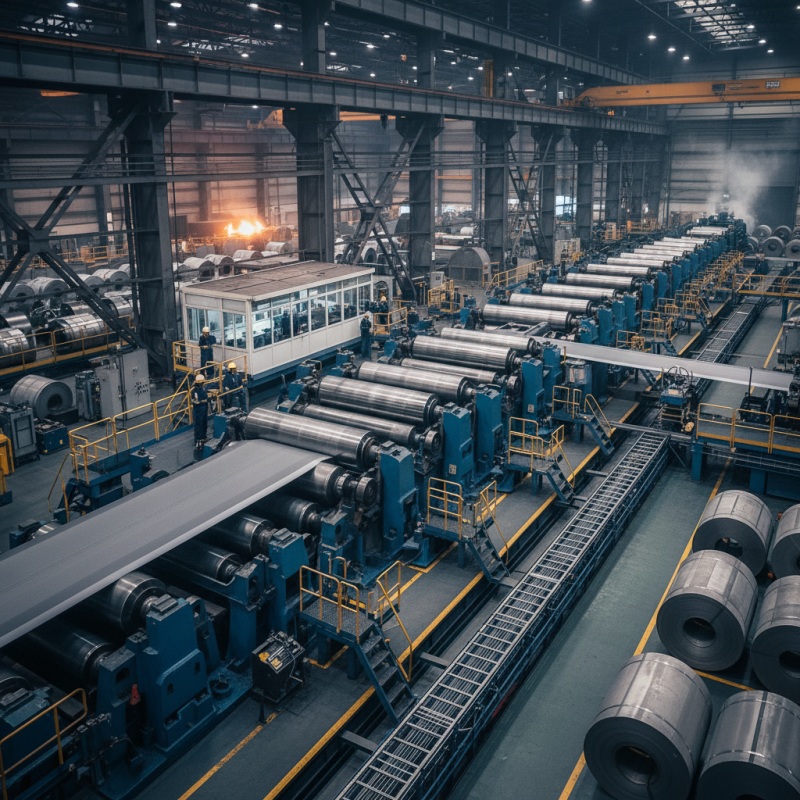
Overview of Tandem Cold Rolling Mill Technology
Tandem cold rolling mills are pivotal in metal processing. This technology enables manufacturers to achieve precise thickness and surface finish in one continuous process. Recent industry reports show that using tandem mills can increase production efficiency by 30%. This reduction is significant for companies striving for cost-effective operations.
The core operation involves multiple stands working in tandem. Each stand further reduces the thickness of the strip. According to the International Journal of Advanced Manufacturing Technology, this technology can produce strips as thin as 0.1 mm with a tolerance of just ±0.005 mm. Such precision is crucial in industries like automotive and aerospace, where specifications are stringent. However, the reliance on this technology means that maintenance standards must be high to prevent disruptions.
Despite these advantages, challenges remain. Not every manufacturer may have the capability to implement a tandem system. The initial investment can be substantial. Additionally, the learning curve for operators can be steep. Some plants may not see the immediate benefits, questioning if the upgrade is worthwhile. Balancing these factors is essential to truly gauge if tandem cold rolling technology fits their production needs.
End-Product Thickness Distribution of Tandem Cold Rolling Mill
This chart illustrates the thickness distribution of products processed through a tandem cold rolling mill. The data reflects the manufacturing requirements for various industries, showcasing the versatility and efficiency of tandem cold rolling technology.
Benefits of Using a Tandem Cold Rolling Mill in Manufacturing
A tandem cold rolling mill offers significant advantages for manufacturers. This machinery allows for continuous processing of metal sheets, which increases efficiency. With each pass, the metal is refined, resulting in thinner and more precise products. The ability to produce various thicknesses is crucial for meeting diverse client needs.
The quality of the final product is another strong point. A well-tuned rolling mill maintains uniformity, which is essential for creating high-quality materials. However, achieving this consistency requires careful calibration and attention to detail. Any oversight can lead to variations that affect the end product. Additionally, regular maintenance is necessary to keep the machinery running smoothly.
Moreover, the flexibility of a tandem system allows manufacturers to adapt quickly to changes in demand. However, this flexibility can also lead to challenges. Balancing speed and quality during production requires constant monitoring. Manufacturers must reflect on their operational strategies to ensure both efficiency and product excellence.
Why Choose a Tandem Cold Rolling Mill for Your Manufacturing Needs? - Benefits of Using a Tandem Cold Rolling Mill in Manufacturing
| Feature | Description | Advantages |
| Higher Production Efficiency | Processes multiple passes in a single continuous operation. | Increases output rates and reduces labor costs. |
| Quality Consistency | Maintains uniform thickness and surface quality. | Enhances product quality and reduces waste. |
| Versatility | Can handle a wide range of materials and sizes. | Suitable for various applications and industries. |
| Cost-Effectiveness | Lowers operational and energy costs compared to other methods. | Improves profit margins and competitive edge. |
| Reduced Material Waste | Efficient material utilization throughout the rolling process. | Helps in minimizing input costs and environmental impact. |
Key Features and Innovations in Tandem Cold Rolling Mills
Tandem cold rolling mills offer significant advantages for manufacturing. They streamline production, resulting in energy savings. A modern tandem mill can process multiple strips in a single pass. This method is more efficient than traditional rolling. Innovations in technology enhance performance, allowing finer tolerances and improved surface quality.
One key feature is the automation of processes. Advanced control systems enable precise adjustments. They react quickly to changes in material properties. This leads to consistent product quality. Additionally, innovations in roll design contribute to better material handling. They reduce wear and enhance lifespan.
Tips: When considering a tandem cold rolling mill, evaluate your specific production needs. Look for features that align with your manufacturing goals. Investigate different material types and thicknesses to ensure compatibility. Reflect on the long-term benefits versus initial investment costs, as they can vary significantly.
Comparative Analysis: Tandem vs. Traditional Rolling Mills
The choice between tandem and traditional rolling mills can be crucial for manufacturers. Tandem mills operate with multiple stands, allowing continuous processing of metal sheets. This setup enhances efficiency and significantly reduces processing time. In contrast, traditional rolling mills work one stand at a time, which often leads to longer production cycles. This can result in delays when high volume is required.
Another important aspect is surface quality. Tandem mills typically provide a smoother finish. This is essential for industries requiring high-quality materials, like automotive and aerospace. However, traditional mills can offer better control in certain scenarios, allowing for customization. Yet, this can lead to inconsistency in output, making quality assurance a challenge.
Manufacturers must weigh these factors against their specific needs. Tandem mills require a higher initial investment but can lead to lower operational costs over time. Traditional mills may be cheaper upfront but could become costly with inefficiencies. It's essential to consider these trade-offs and recognize that the best choice depends on unique production demands and long-term goals.
Applications and Industries Utilizing Tandem Cold Rolling Mills
Tandem cold rolling mills play a crucial role in various manufacturing sectors. Their efficiency and precision make them ideal for producing thin metal sheets. Industries like automotive and aerospace rely heavily on these mills. They need high-strength, lightweight materials for vehicle parts and components.
According to a recent market analysis, around 30% of global steel production utilizes cold rolling methods. This figure illustrates the importance of these mills in modern manufacturing. Additionally, the demand for high-quality metal strips has surged. Reports show that demand in the packaging industry is expected to grow by 4% annually through 2025. This trend indicates a ripe opportunity for manufacturers to invest in tandem cold rolling technology.
However, there are challenges. Not all materials can be processed without issues. Some alloys experience surface defects during rolling. Manufacturers must continuously adapt their techniques. They need to find the right balance between speed and quality. This ongoing adjustment often leads to inefficiencies. Companies are aware of these setbacks but must prioritize overcoming them.