How to Choose the Right Food Packaging Equipment for Your Business?
Choosing the right food packaging equipment is crucial for any business in the food industry. According to industry expert James T. Lentz, "The right equipment can transform your production efficiency." This statement underlines the importance of making informed decisions.
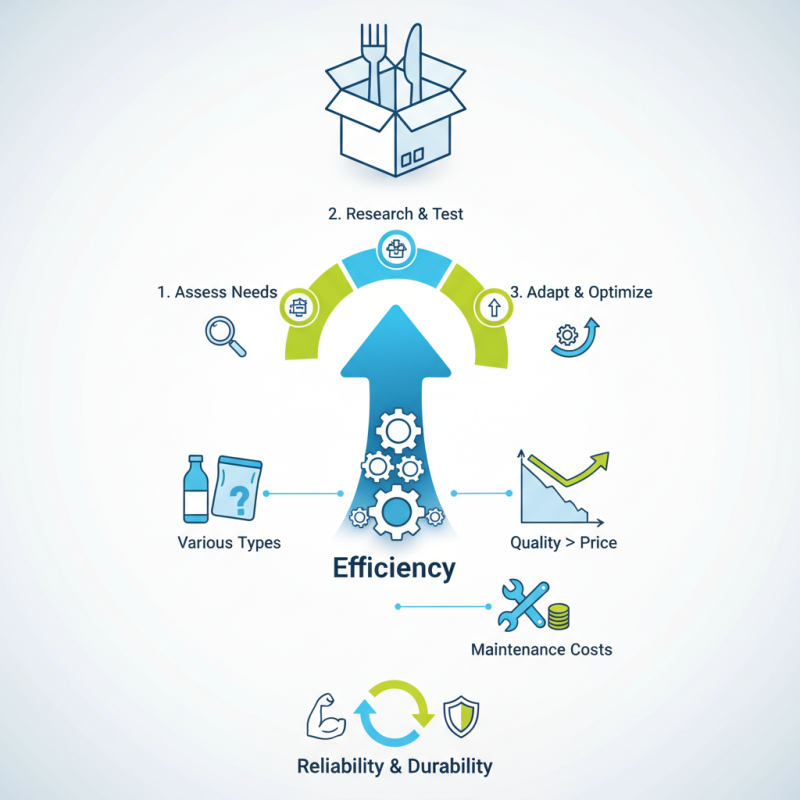
Food packaging equipment comes in various types, from bottling machines to vacuum sealers. Each type serves a unique purpose. Understanding your specific needs is vital. For example, a small bakery may require a different setup than a large-scale manufacturer. Don’t overlook maintenance costs, which can add up over time.
Many businesses face challenges when selecting equipment. They often prioritize price over quality. This can lead to poor performance and higher long-term costs. When looking for food packaging equipment, focus on reliability and durability. Investing in high-quality machines pays off, but finding the right fit takes research and testing. Be prepared to reflect on your choices and adapt as needed.
Understanding Your Business Needs and Goals
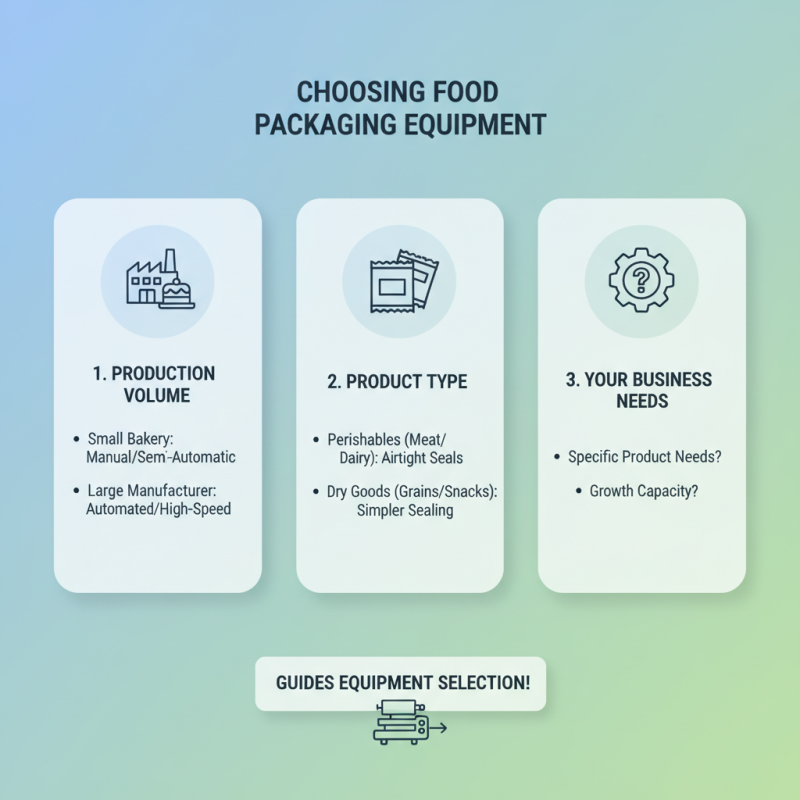
When evaluating food packaging equipment, it’s crucial to focus on your specific business needs. Assess your production volume. A small bakery may require different packaging solutions than a large-scale food manufacturer. Consider the types of products you offer. Perishable items often need airtight seals, while dry goods might need simpler solutions. Understanding these aspects will guide you in selecting the appropriate machinery.
Next, think about your growth goals. Are you aiming to expand your product line or improve efficiency? Investing in versatile equipment can pay off in the long run. However, it’s essential to reflect on your budget and operational capacity. Some machines may seem ideal but could lead to overextension. Take a moment to analyze if the chosen model aligns with your long-term vision. While perfect solutions are rare, striving for the right fit is vital to your success.
Evaluating Different Types of Food Packaging Equipment
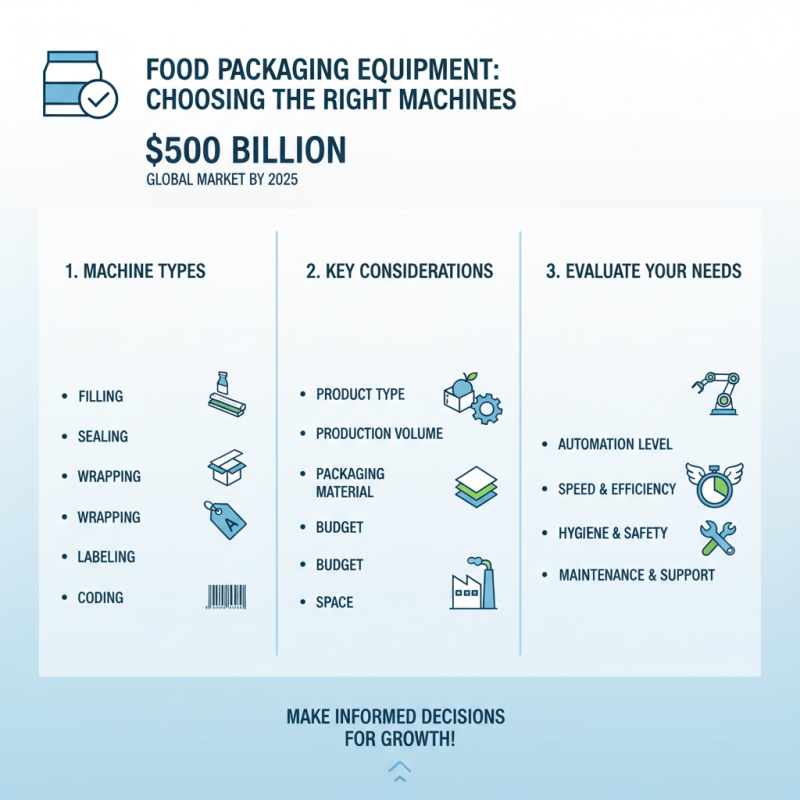
Choosing the right food packaging equipment involves understanding various types of machinery available in the market. According to industry reports, the global food packaging market is projected to reach $500 billion by 2025. It's crucial to evaluate your specific needs before making a decision.
The most common types of food packaging equipment include vacuum sealers, heat sealers, and labeling machines. Each type serves a different purpose. Vacuum sealers extend shelf life by removing air from packaging. Heat sealers offer strong seals for liquids. Labeling machines ensure compliance with regulations. Each option has its strengths and weaknesses.
When evaluating equipment, consider production speed, size, and cost. Small businesses might prioritize affordability and flexibility. Large operations may need high-speed machines. Test the equipment if possible. Getting a feel for its operation could save you from future headaches.
Tip: Always look for user reviews online to gauge reliability.
Moreover, don’t overlook maintenance requirements. Some machines can be hard to clean, which might lead to food safety issues. Balancing efficiency and hygiene is vital in food packaging.
Tip: Schedule regular maintenance checks to avoid unexpected downtimes.
Assessing Equipment Features and Specifications
When choosing food packaging equipment, assessing features and specifications is crucial. Look closely at machine speed. For example, a report from Smithers shows that high-speed machines can boost production efficiency by 30%. Evaluate the type of packaging required. Is it flexible packaging or rigid containers? This choice affects both equipment design and operational efficiency.
TIP: Always verify the maximum and minimum fill capacities. Different products may need varying configuration. It's common for businesses to underestimate this aspect, leading to inefficiencies.
Another essential feature to consider is the ease of cleaning and maintenance. Equipment that requires less downtime can save significant time and money. According to industry analysis, equipment with quick-changeover features can increase productivity by 25%. Remember, operational flexibility is vital in today’s market.
TIP: Don’t overlook energy efficiency. Machinery that consumes less power can reduce operational costs. However, be cautious; some high-efficiency models have hidden maintenance costs. Ignoring these can lead to financial strain in the long run.
Considering Budget and Cost Implications
Choosing the right food packaging equipment can significantly impact your bottom line. Budget is crucial in this decision-making process. A higher initial cost may promise advanced features, but consider long-term savings. Reliable equipment often reduces maintenance costs. Investigate not just the purchase price, but also ongoing operational expenses.
Tips: Assess your average production volume. This helps identify the suitable machinery capacity. Overestimating needs can lead to unnecessary expenditures. Explore leasing options instead of outright purchases. It offers flexibility and lower upfront costs.
Costs extend beyond the equipment itself. Training staff is essential for using new machinery efficiently. This training can be a hidden cost that affects your budget. Allocate funds for this aspect in advance. Analyze if your current staff can adapt or if new hires are necessary. Regularly reevaluate equipment performance to avoid future issues. Sometimes, a well-maintained older model can outperform newer machines.
Researching Suppliers and After-Sales Support Options
When searching for food packaging equipment, researching suppliers is vital. Start by identifying potential suppliers. Look for those with a solid reputation in the industry. Reviews from previous clients can reveal a lot. Engage with your network and ask for recommendations. Personal experiences often provide the most detailed insights.
After identifying potential suppliers, evaluate their after-sales support options. Good support can save you time and money. You'll want to know about warranty details and maintenance services. Ask if they provide training for your team on using the equipment. This is often overlooked, yet crucial for effective operation.
Tips: Ensure the supplier has a transparent communication process. A quick response to queries indicates good customer service. Don’t forget to assess their availability for remote assistance. Choosing a supplier with a strong support system is essential. Look carefully. Small details can have big impacts.
How to Choose the Right Food Packaging Equipment for Your Business
This chart illustrates the various types of food packaging equipment commonly used in the industry and their respective market share percentages. Understanding the distribution of equipment can help businesses make informed decisions when selecting packaging solutions.