
China Top Direct Thermal Roll Labels Supplier?

Choosing a China top supplier for Direct Thermal Roll Labels requires more than comparing prices. Label performance depends on paper quality, coating consistency, adhesive strength, and accurate rewinding. A reliable supplier should explain these details clearly. They should also provide samples before production.

Direct thermal labels are widely used for shipping, retail, warehousing, weighing, and receipt printing. Their heat-sensitive surface produces images without ink or ribbons. However, the printed image can fade when exposed to sunlight, heat, moisture, or friction. That limitation matters.

A professional supplier should help match the label material to its application. For example, a warehouse barcode may need strong adhesion on corrugated cartons. A refrigerated product may require adhesive stability at low temperatures. Core size, roll diameter, label gap, winding direction, and printer compatibility also deserve careful review.

Small details matter.

Experience is visible in the questions a supplier asks. They should discuss GSM, coating performance, die-cut accuracy, barcode readability, and packaging protection. Independent testing or clear quality records can strengthen confidence. Certifications may support credibility, but they should never replace practical verification.

No supplier is perfect. Samples can perform well while large batches reveal minor variation. That risk deserves honest attention. Buyers should inspect trial orders, request production photos, and confirm batch consistency before scaling. A dependable China supplier combines manufacturing capability with responsive communication and transparent problem-solving.

This guide explores how to evaluate suppliers, compare specifications, and select Direct Thermal Roll Labels that suit real operating conditions. The goal is not simply to find the cheapest option. It is to secure stable quality, predictable delivery, and labels that work when your business needs them most.
China Top Direct Thermal Roll Labels Supplier?

What Are Direct Thermal Roll Labels?

Direct thermal roll labels are pressure-sensitive labels that print through heat, not ink or ribbon. A thermal printhead touches the coated surface and creates dark text, barcodes, or simple graphics. The roll format feeds smoothly through compatible printers, making it useful for shipping, weighing, inventory, and short-term product identification. The label usually includes face stock, heat-sensitive coating, adhesive, and release liner. Not every roll fits every machine.

A correct specification starts with dimensions. Measure label width, height, core diameter, and outside roll diameter. Check the printer’s maximum roll size and sensor position. A 100 mm by 150 mm label may suit a parcel, while a 58 mm label fits smaller tasks. Adhesive choice also matters. Permanent adhesive can hold on cardboard, but removable adhesive may suit reusable containers. In practical testing, scan barcodes after printing, especially near the roll’s outer edge. Small alignment errors become costly at scale.

Direct thermal labels reduce consumables and simplify daily operation. They are not perfect. Sunlight, friction, heat, and some chemicals can fade or darken the image. Store unused rolls in a cool, dry, dark place, preferably in sealed packaging. For records kept for years, another label technology may be safer. Samples matter. A label can look clean on screen yet peel from cold plastic or curl during dispensing. Some tests still fail. Supplier quality depends on coating consistency, winding tension, adhesive stability, and clear inspection records.


How Are Direct Thermal Roll Labels Made in China?

China Top Direct Thermal Roll Labels Supplier?

How Are Direct Thermal Roll Labels Made in China?

Direct thermal roll labels begin with smooth paper, a heat-sensitive coating, and a carefully selected adhesive. The coating contains leuco dyes and developers. Heat activates the layer and creates the printed image without ink or ribbons. A 2024 industry report, The Future of Thermal Printing to 2028, estimated the global thermal printing market at about US$40 billion in 2023. It also projects continued growth through 2028, driven by logistics, retail, healthcare, and warehouse labeling.

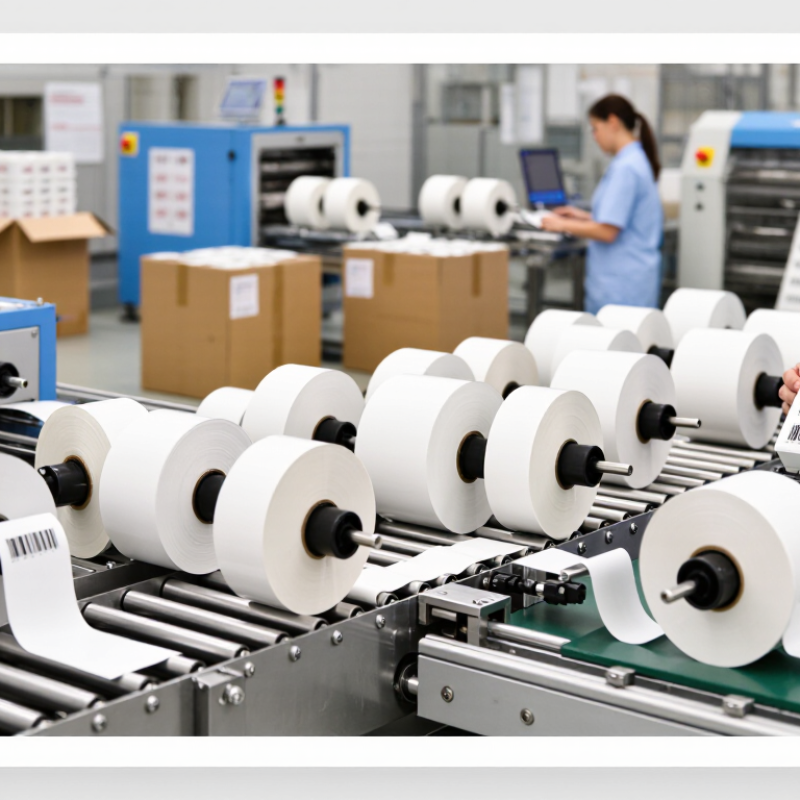
In Chinese factories, jumbo paper rolls are first unwound and coated through precision rollers. Drying ovens remove moisture and stabilize the chemical layer. Some products receive a protective topcoat for better resistance against light, abrasion, and handling. The finished material is then die-cut, slit, and rewound into smaller rolls. Operators check core size, winding tension, label spacing, coating uniformity, and barcode readability. Small details matter.

A 2023 industry packaging report noted that self-adhesive labels remain a major segment of the worldwide label market. This supports steady demand for direct thermal materials, especially in short-term applications. Still, factory speed can create problems. Excessive tension may deform the roll. Uneven coating may produce pale printing. I would not trust one inspection sample alone. Reliable production needs batch records, retained samples, and repeated heat-resistance testing. ISO-based quality procedures help, but practical experience remains essential. A label can look perfect today and fail after weeks in a hot warehouse.

What Makes a China-Based Supplier a Top Choice?

China Top Direct Thermal Roll Labels Supplier?

A China-based supplier can be a top choice when quality control matches production capacity. Experienced manufacturers understand how direct thermal labels behave in shipping, retail, and warehouse environments. They select suitable facestock, adhesive, and thermal coating for each application. A reliable supplier should provide samples before bulk production. Test them on your actual printers and scanners. Small details matter. Roll winding, core size, label spacing, and print darkness can affect daily operations.

Suppliers with strong technical teams can adjust coating performance for humidity, cold storage, or frequent handling. They should explain material limits clearly, rather than promise universal performance. Factory inspections, batch records, and documented quality checks also improve trust. Export experience helps with packaging, communication, and delivery planning. Still, no supplier is perfect. Color shade, adhesive strength, or delivery timing may occasionally vary. That is why transparent corrective action matters more than attractive claims.

Tips: Request production samples, inspection photos, and a written specification sheet. Confirm roll diameter, core size, label dimensions, and printer compatibility. Ask how rejected rolls are separated and recorded. Check whether the supplier can keep the same material batch over repeated orders. A video factory tour can help, but it should not replace physical testing. Good communication is useful. Measurable evidence is better.

China-Based Direct Thermal Roll Label Supplier: Common Format Coverage

A top supplier should support the roll widths most frequently used in thermal receipt, barcode, logistics, and retail-label applications. The chart shows common direct thermal roll widths in millimeters, helping buyers assess production flexibility and compatibility.

Standard formats such as 58 mm and 80 mm are widely used in receipt printers, while 100 mm and 104 mm formats are common in barcode and shipping-label equipment. Broader format coverage can reduce the need for multiple suppliers and simplify procurement.

How to Evaluate a Direct Thermal Label Supplier

China Top Direct Thermal Roll Labels Supplier?

Choosing a direct thermal label supplier requires more than comparing prices. Start with practical experience. Ask how long the factory has produced labels for shipping, retail, or warehouse use. Request samples in your actual printer. Check whether a 4 x 6 inch roll feeds smoothly at normal speed. Small details matter.

Evaluate the material carefully. A reliable supplier should explain paper sensitivity, adhesive strength, core size, roll diameter, and storage limits. Test labels in heat, humidity, and cold conditions. Print fine barcodes and small text. The image should remain sharp without dark background marks. Ask for batch records and inspection data. Certifications can support credibility, but they do not replace testing. That is an important distinction.

Tips: Compare at least three samples. Measure label width, winding direction, and roll length. Confirm packaging protects the rolls from moisture and dust. Ask about production lead time, replacement procedures, and communication during delays. A stable supplier should answer clearly, not promise everything immediately. Low prices can be tempting. My experience suggests they may hide weaker adhesive or inconsistent coating. Even careful evaluations can miss a problem. Keep a retained sample from every approved batch, and review performance after real printer use.

China Top Direct Thermal Roll Labels Supplier? - How to Evaluate a Direct Thermal Label Supplier

Evaluation Dimension Key Specification or Benchmark Why It Matters Recommended Verification Method Suggested Weight
Label Material Direct thermal facestock with a uniform heat-sensitive coating; common paper basis weights are approximately 60–90 g/m². Material consistency affects print quality, feeding performance, and resistance to tearing or curling. Request a technical data sheet and compare samples from different production lots. 12%
Print Contrast Clear black image development at the printer’s normal operating temperature and speed, without gray background or excessive darkening. Strong contrast improves barcode scanning and text readability. Print barcodes and small text on samples using the intended printer settings, then check readability with a calibrated scanner. 14%
Barcode Performance Barcodes should meet the applicable quality grade required by the customer, carrier, retailer, or automatic identification system. Poor barcode quality can cause scanning failures, shipment delays, and manual processing costs. Use a barcode verifier where required; test at different print speeds, darkness levels, and orientations. 16%
Image Durability The printed image should remain legible for the required application period under expected light, heat, moisture, and handling conditions. Direct thermal images can be sensitive to heat, friction, chemicals, plasticizers, and prolonged sunlight. Conduct application-specific rub, moisture, heat, and light exposure tests using the actual label stock and packaging. 14%
Adhesive Performance Adhesive selection should match the substrate, temperature range, surface energy, and required permanent or removable application. Incorrect adhesive can cause edge lifting, label detachment, residue, or application failure. Test on corrugated board, coated cartons, plastic, glass, or other actual surfaces at the intended application temperature. 12%
Dimensional Accuracy Label width, height, gap, core size, and winding direction must match the printer and dispensing equipment requirements. Small dimensional errors may cause misfeeds, sensor errors, image shifting, or roll rejection. Measure samples with calibrated tools and run a full-roll trial on the intended printer or applicator. 10%
Roll Construction Consistent winding, smooth edges, secure roll tension, and a clean slit without loose debris or telescoping. Stable roll construction supports reliable feeding and reduces printer downtime. Inspect roll edges, check winding direction, and run rolls continuously at the planned production speed. 8%
Printer Compatibility The label should be compatible with the required thermal printer type, printhead, sensor system, speed, and darkness settings. Compatibility reduces calibration time, printhead wear, and operating interruptions. Perform a production-equipment trial covering startup, continuous printing, reloading, and barcode scanning. 8%
Quality Control Documented inspection of dimensions, coating, adhesive, roll appearance, packaging, and lot traceability. Traceability makes it easier to identify defects and manage corrective actions. Request inspection records, lot identification, retained samples, and the supplier’s nonconformance procedure. 8%
Packaging and Storage Protective packaging should prevent moisture, dust, crushing, and excessive heat during storage and transport. Improper storage can reduce adhesive performance and cause premature image darkening. Check packaging strength and request recommended storage conditions, shelf-life guidance, and shipment protection details. 6%
Compliance and Documentation Clear product specifications, safety information, test reports where applicable, and documentation for the destination market. Complete documentation supports purchasing approval, product qualification, and regulatory review. Review technical documents, declarations, test reports, and labeling requirements before order confirmation. 5%
Lead Time and Supply Stability A clearly defined production schedule, realistic replenishment lead time, and contingency plan for material shortages. Stable supply is essential for recurring shipping, warehousing, retail, and manufacturing operations. Compare quoted lead times with actual sample and trial-order performance; review capacity and backup-material arrangements. 5%
Total Suggested Evaluation Weight 100%
Evaluation Note: Score each dimension from 1 to 5 based on documented evidence and production trials, then multiply the score by the suggested weight. The final supplier selection should prioritize application performance and consistency rather than unit price alone.

Which Industries Use Direct Thermal Roll Labels?

Direct thermal roll labels serve industries that need fast, readable identification.

Logistics companies use them for shipping labels, carton tracking, and warehouse shelf checks. Retailers print price stickers, weighing labels, and short-term promotional tags at checkout. These labels need no ink ribbon, which reduces printer maintenance and supports high-volume daily work.

Healthcare facilities use direct thermal labels for specimen containers, patient files, and pharmacy instructions. Food processors apply them to trays, scales, and takeaway packaging. Manufacturing plants also label parts, bins, and work orders during production.

Smithers’ The Future of Thermal Printing to 2028 identifies logistics, retail, healthcare, and manufacturing as important thermal-printing users. Its findings reflect a practical advantage: direct thermal printing remains useful where speed matters more than long-term image stability.

The market is still expanding.

Grand View Research forecasts a 5.2% compound annual growth rate for the thermal printing market from 2023 to 2030. However, direct thermal labels are not suitable for every environment. Heat, sunlight, friction, and plasticizer exposure can darken or fade the image.

That weakness is easy to overlook. Food and logistics teams should test label stock under real storage conditions. A cold warehouse behaves differently from a delivery truck.

Suppliers should recommend materials by application, not simply by roll size or price.

Shopping cart