
7 Best Thermal Print Paper Suppliers for Global Buyers

Choosing the right Thermal Print Paper supplier can influence print clarity, machine performance, and operating costs across international markets. A receipt roll may look simple, yet its coating, core size, thickness, and moisture resistance affect every printed transaction. Global buyers also need stable production capacity, export experience, transparent documentation, and responsive after-sales support. Small details matter.

This guide examines seven leading suppliers through practical purchasing criteria. It considers paper quality, coating consistency, roll customization, packaging, lead times, and communication reliability. Samples should be tested in actual printers, especially where receipts face heat, sunlight, humidity, or frequent handling. A bright image at delivery does not guarantee lasting readability. That lesson is easy to miss.

The selection also reflects professional buying concerns, including technical specifications, quality-control procedures, sustainability information, and international shipping capability. Supplier claims are useful, but verifiable evidence carries greater weight. Buyers should request datasheets, sample rolls, production photographs, and recent customer references when available. No shortlist is flawless. Product performance can vary between batches, and a strong supplier may still need clearer communication. Careful comparison remains essential.

From retail counters in London to logistics warehouses in Singapore, dependable thermal paper supports fast and accurate daily operations. The best choice is not always the cheapest offer. It is the supplier that consistently matches equipment requirements, protects paper during transit, and responds when problems appear. These seven options provide a practical starting point for buyers seeking dependable global supply.
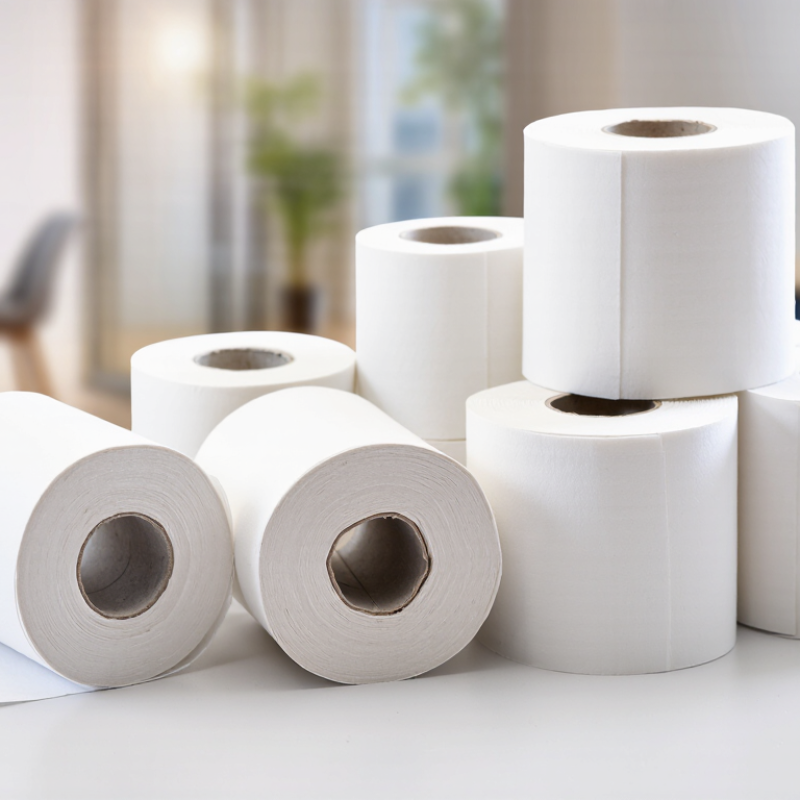
7 Best Thermal Print Paper Suppliers for Global Buyers

Thermal Print Paper: Definition, Uses, and Key Performance Features

Thermal Print Paper: Definition, Uses, and Key Performance Features

Thermal print paper has a heat-sensitive coating that creates images without ink or toner. A printer’s thermal head activates selected areas, producing text, numbers, or barcodes. This simple process reduces consumable waste and supports fast, quiet printing. Common uses include retail receipts, shipping labels, parking tickets, weighing records, and temporary event passes. Direct thermal paper suits short-term records, while heat-sensitive labels may need stronger protection for longer storage.

Performance depends on more than whiteness. Check paper thickness, roll width, core size, and printer compatibility before ordering. Image density should remain clear at normal print speed. A barcode must scan reliably, even when the roll is nearly empty. Resistance to heat, moisture, light, and abrasion matters in warehouses or delivery vehicles. Ask suppliers for coating specifications and compliance documents. “High quality” alone proves little.

Tips: Test sample rolls in the actual printer. Store them away from sunlight, humidity, and heated surfaces. Compare print darkness at several speed settings. A darker image is not always better; it can increase print-head wear. In practical sourcing, small differences in curl or coating can cause jams. I have found that a perfect laboratory sample may perform poorly after transport. That risk deserves attention.


Thermal Print Paper: Definition, Uses, and Key Performance Features

Thermal print paper is coated with a heat-sensitive layer that produces images when activated by a thermal printhead, eliminating the need for ink or toner. Its basis weight affects stiffness, handling, durability, and suitability for different applications.

The chart shows representative commercial basis-weight ranges commonly specified for major thermal paper applications. Actual requirements vary by printer model, coating grade, adhesive construction, environmental conditions, and expected storage life. Buyers should also evaluate print sensitivity, image stability, smoothness, opacity, moisture resistance, and compliance requirements.

How to Evaluate Thermal Paper Suppliers for International Purchasing

International buyers should evaluate thermal paper suppliers beyond the quoted price. A roll may print clearly in a showroom and fade in a humid warehouse. Ask for samples from several production batches. Test darkness, image stability, curl, dust, and feeding performance on your actual printers. Measure roll width, length, core diameter, and winding direction. Small differences can stop a cashier or label printer.

Reliable suppliers provide technical data sheets, safety documents, coating information, and recent quality records. Request compliance evidence for the destination market, not generic certificates. Confirm whether the paper contains restricted substances under applicable regulations. Independent laboratory reports are more useful when they identify test methods and sample dates. Check factory capacity, minimum order quantity, lead time, carton protection, and export experience. Clarify delivery terms, payment stages, claims handling, and replacement procedures before signing.

Communication quality is evidence, too. A capable supplier answers technical questions directly and records agreed specifications. Ask how they control coating weight, moisture, roll tension, and lot traceability. For ocean shipments, discuss moisture barriers and container conditions. I would request a pilot order before committing to annual volume. It costs more upfront. That cost can expose weak winding or inconsistent sensitivity early. No evaluation is perfect; forecasts change, and even a trusted supplier may miss a tolerance. Document every assumption, then review performance after delivery rather than relying on promises.

Seven Leading Thermal Print Paper Suppliers for Global Buyers

Seven Leading Thermal Print Paper Suppliers for Global Buyers

Global buyers need more than a low quotation. Smithers’ The Future of Thermal Paper to 2028 reports continued demand from retail, logistics, healthcare, and ticketing applications. The report also highlights pressure to improve coating performance and chemical compliance. Based on sourcing experience, seven supplier profiles deserve attention: an integrated paper mill, a high-volume Asian exporter, a European specialty converter, a North American distributor, a logistics-roll producer, a POS-focused converter, and a custom jumbo-roll processor.

Each option serves a different purchasing need. Integrated mills often provide stable basis weight and coating consistency. Export converters may offer sharper prices, but moisture protection requires verification. Specialty converters usually support tighter roll tolerances and private packaging. Distributors can shorten delivery times. Logistics producers should demonstrate strong barcode readability after abrasion. POS-focused suppliers need reliable heat activation at different printer speeds. Custom processors can match core diameter, roll length, and perforation requirements.

Grand View Research estimates that the global thermal paper market will expand steadily through this decade, driven by transaction receipts and shipping labels. Buyers should request recent test reports, sample rolls, REACH and other regional compliance statements, and storage guidance. A practical test includes 30 days in humid conditions, repeated scanning, and direct thermal image checks. Small details matter. A 0.5-millimeter winding error can create feeding problems. Price alone is a weak filter. Some published market figures vary widely, so procurement teams should verify methodology, reporting year, and product scope before approving a supplier.

Comparing Product Quality, Certifications, Pricing, and Customization

7 Best Thermal Print Paper Suppliers for Global Buyers

Comparing Product Quality, Certifications, Pricing, and Customization

Global buyers should compare thermal paper beyond the lowest quoted price. A reliable supplier provides consistent image density, smooth feeding, and clean roll edges. Test rolls reveal more than a catalog. Check printing across different temperatures, storage conditions, and printer models. Some paper performs well initially but fades after several weeks. That weakness matters.

Certifications require careful verification. Ask for current documents covering quality systems, chemical restrictions, and responsible forestry where applicable. ISO 9001 can indicate controlled production, but it does not guarantee excellent thermal performance. Request test reports for BPA or BPS content when market regulations require them. Documentation should match the exact paper grade, coating, and factory. Generic certificates deserve caution.

Pricing depends on more than roll weight. Core size, roll length, packaging, order volume, freight, and import duties can change the final cost. A lower unit price may hide higher waste. Customization can include roll dimensions, adhesive labels, printed packaging, perforations, and private carton designs. Confirm artwork approval, minimum order quantities, sample charges, and lead times in writing. I have found that small trial orders often expose curling or uneven coating. No supplier is perfect. Even experienced buyers should review samples after production changes, because a coating adjustment can alter printer compatibility.

7 Best Thermal Print Paper Suppliers for Global Buyers - Comparing Product Quality, Certifications, Pricing, and Customization

Supplier Profile Product Quality Common Product Formats Typical Certifications & Compliance Documents Indicative FOB Price* Typical MOQ Customization Capability Lead Time Best Fit for Global Buyers
Supplier Profile 1 Premium BPA-free thermal coating; clear, dark image density; good resistance to heat, moisture, and light. POS rolls, ATM rolls, kiosk rolls, label rolls; 48–80 gsm options. REACH and RoHS declarations; ISO 9001 quality-management documentation available on request. US$1.05–1.45 per kg 1–3 metric tons Custom width, core diameter, roll length, packaging, carton markings, and private-label printing. 15–25 days after artwork and specification approval. Retail chains, payment-service distributors, and buyers requiring stable image quality.
Supplier Profile 2 Balanced everyday grade with reliable printing performance and consistent roll winding. Standard POS rolls, cash-register rolls, delivery receipts; 55–65 gsm. REACH, RoHS, and heavy-metal test reports; FSC-related documentation may be available for selected paper grades. US$0.88–1.20 per kg 500 kg–1 metric ton Standard-size customization, core options, barcode labels, neutral cartons, and printed inner packaging. 12–20 days for regular specifications. Importers seeking competitive pricing and flexible trial orders.
Supplier Profile 3 High-sensitivity thermal layer designed for sharp barcodes and small text at lower printer energy settings. Barcode labels, logistics labels, warehouse labels, and direct-thermal facestock; 60–75 gsm. REACH and RoHS declarations; product technical data sheets and adhesive test reports available by grade. US$1.20–1.75 per kg 1–2 metric tons Die-cut labels, fan-fold formats, adhesive selection, perforation, black-mark printing, and variable data support. 20–30 days, depending on adhesive and die tooling. Logistics, e-commerce fulfillment, healthcare, and warehouse-label applications.
Supplier Profile 4 Standard and economy grades focused on dependable short-term receipt readability and low material cost. POS rolls, restaurant order rolls, queue tickets, and basic cash-register paper; 48–60 gsm. REACH and RoHS declarations; basic quality inspection reports supplied with bulk orders. US$0.72–1.00 per kg 300–500 kg Widths, lengths, cores, perforation, carton quantities, and shipping marks can be adjusted. 10–18 days for standard products. Small distributors, food-service operators, and price-sensitive regional buyers.
Supplier Profile 5 Premium phenol-free or phenol-reduced options with improved handling safety and better resistance to discoloration. POS rolls, ATM rolls, medical records, queue tickets, and specialty receipt paper; 55–80 gsm. REACH and RoHS; BPA/BPS or phenol-free declarations; third-party chemical screening available for selected products. US$1.35–2.10 per kg 1–3 metric tons Special coating selection, custom roll dimensions, branded packaging, security marks, and application-specific testing. 20–35 days after laboratory and artwork approval. Healthcare, banking, government procurement, and buyers with restricted-chemical policies.
Supplier Profile 6 Strong moisture and abrasion resistance for demanding transport, outdoor, and refrigerated-chain applications. Freezer labels, shipping labels, transport tickets, and durable direct-thermal labels; 65–90 gsm. REACH and RoHS; adhesive performance data, temperature-range testing, and migration reports available by specification. US$1.60–2.60 per kg 1–5 metric tons Water-resistant topcoat, freezer-grade adhesive, custom die cutting, perforation, and application testing. 25–40 days, depending on coating and adhesive requirements. Cold-chain logistics, food distribution, courier services, and industrial labeling.
Supplier Profile 7 Flexible multi-grade supply with consistent basic specifications and export-oriented packaging control. POS rolls, ATM rolls, label stock, kiosk rolls, and custom ticket paper; 48–80 gsm. REACH and RoHS declarations; ISO 9001 documentation and FSC chain-of-custody evidence may be available by order. US$0.95–1.55 per kg 500 kg–2 metric tons Mixed specifications, multilingual packaging, custom cores, carton quantities, pallet configuration, and private labeling. 15–28 days for standard export orders. Trading companies, wholesalers, and buyers sourcing several thermal-paper formats together.

*Indicative FOB price ranges are for comparison only and may vary according to paper weight, coating chemistry, order volume, exchange rates, packaging, port of loading, and certification requirements. Buyers should verify current specifications, test reports, and quotations directly before placing an order.

Ordering, Shipping, and Quality Control for Cross-Border Supply

Global thermal paper buying depends on more than unit price. Buyers should request roll width, core diameter, basis weight, coating type, and storage limits before ordering. A 500-roll sample can reveal curl, dust, weak coating, or uneven winding.

Shipping needs a realistic buffer. UNCTAD’s Review of Maritime Transport 2024 states that ships carry over 80% of global merchandise trade by volume. Port congestion can still delay ordinary cargo. The World Bank’s Logistics Performance Index 2023 found that international shipments may take about 44 days from export entry to final arrival. Use moisture-proof inner wrapping, strong cartons, and pallet corner protection. Ask suppliers for carton photos before loading. Small details matter.

Quality checks should follow a written inspection plan. ISO 2859-1 provides sampling methods based on acceptance quality limits. Check paper brightness, thermal image density, roll length, splice count, and barcode readability. Test receipts after heat, pressure, and humidity exposure. The International Organization for Standardization reports that controlled storage commonly uses moderate temperature and humidity conditions, but real warehouses are less stable. I learned this the hard way: a clean factory sample may fail after weeks in a hot container. Recheck samples after simulated transit. Keep batch numbers, inspection records, and shipment photos. Perfect control is unlikely, but traceable mistakes are easier to correct.

Shopping cart